The Locked up Living Podcast: Surviving and thriving in prisons and other challenging environments
Can institutional culture challenge your mental health? What if your job makes you feel shame, sadness, grief, disgust and fear? What if you are expected not to feel? Or you are expected to be relentlessly competitive? What it’s like to live or work in a prison? Does working with people who commit murder, child abuse and rape affect people who work in prisons and the wider criminal justice system?
How do people survive and thrive when facing significant challenges to our emotional health over a lengthy period? How do we protect ourselves and stay compassionate, loving and trusting? Importantly, how do we find and preserve hope?
Fyodor Dostoevsky wrote that “The degree of civilisation in a society can be judged by entering its prisons”. In this weekly podcast ,your hosts, David Jones (Forensic psychotherapist) and Dr Naomi Murphy (Consultant Clinical & Forensic Psychologist) hope that exploring less visible aspects of prisons will help listeners see that prisons are a window into society and let us see people not only at their worst but also at their best. We feature a rich range of guests sharing snap shots of life in prisons and take a look at hospitals, schools, sport and the police in order to learn from other institutions. We learn about challenges to human integrity and hear important lessons and heart-warming stories about survival and growth when facing adversity in harsh places. We hope that sharing our conversations can help you make changes to your own relationship with institutions that might challenge your emotional health and well-being.
Follow and connect with us and give us feedback. Let us know what you think works, and also what doesn’t. We want you to look forward to the podcast each week. We’ll also be extremely grateful for any reviews that you give us. A simple star or two or a thumbs up will do.
Email: lockedupliving@gmail.com or connect with us on:
Substack: https://lockedupliving.substack.com
Twitter: https://twitter.com/LockedUpLiving
Linkedin: https://www.linkedin.com/in/naomimurphypsychologist/
https://www.linkedin.com/in/david-jones-41910b12/
Insta: https://www.instagram.com/lockedupliving/
Listen on:







Episodes
Wednesday Dec 08, 2021
Wednesday Dec 08, 2021
Professor Kimberley Brownlee is a philosopher. She holds the Canada Research Chair in Ethics and Political & Social Philosophy at the University of British Columbia in Canada. Prior to that, she lived in the UK for close to 20 years and was a professor at the University of Warwick and senior lecturer at the University of Manchester. Her work focuses on loneliness, belonging, social human rights, punishment, conscientious belief, and civil disobedience. She is the author of two books: Conscience and Conviction: The Case for Civil Disobedience, and of Being Sure of Each Other: An Essay on Social Rights and Freedoms. She has engaged with senior management teams in UK prisons who are working to improve the ways they speak - and think - about the people in their care.

Wednesday Dec 01, 2021
Wednesday Dec 01, 2021
Jacqui is a Speech and Language Therapist at HMP Berwyn. Hidden within the prison walls are people with various needs which are a risk to their health and wellbeing. Jacqui works across all ages from 18 to end of life, trying to support the communication needs of this marginalised group at all stages of their prison sentence. She has specific interests in de-escalating tense situations via communication, supporting competence in social communication and helping everyone understand that just because a person can talk, doesn’t mean that they are skilled in understanding and expression.

Wednesday Nov 24, 2021
Wednesday Nov 24, 2021
Dr Kerry Beckley is Consultant Clinical Forensic Psychologist who has worked in a range of forensic hospital and community settings. She is known for her work in developing and training others to use schema therapy in these contexts, and is an accredited trainer/supervisor in individual and group schema therapy. Having spent 23 years working for the NHS, she now runs her own independent psychology practice, primarily providing expert witness reports for parole hearings and mental health tribunals, in addition to offering clinical supervision to other practitioners. One of her latest ventures is Forensic Conversations, a webinar series that she co-hosts with fellow psychologist Dr Jackie Craisatti, where they discuss a range of topics relevant to those working in the criminal justice system, sometimes inviting guests to join them.
https://www.psychological-approaches.org/forensic-conversations.html
Friday Nov 19, 2021
Friday Nov 19, 2021
We have long wanted to give voice to Andy's Man Club and International Men's Day, 19th November is a good opportunity to do so.
ANDYSMANCLUB are a Men’s Mental Health Charity – Offering free-to-attend talking groups for men and challenging the stigmas around Male Mental Health. We started off as one group in the small, northern town of Halifax. That first night 9 men turned up and spoke. There was a magic in that room that everyone knew had to be shared.
We knew other guys across the country needed this same experience. We have worked tirelessly through Andy’s memory togrow our clubs. We now have 69, and we continue to grow across the UK.
Andy's Man Club is described as "a talking group, a place for men to come together in a safe environment to talk about issues and problems they have faced or are currently facing". It was formed by Luke Ambler and his mother-in-law Elaine after his brother-in-law took his own life
https://andysmanclub.co.uk/
Wednesday Nov 17, 2021
Wednesday Nov 17, 2021
Alison Liebling, is a British criminologist and academic. She has been Director of the Prisons Research Centre at the University of Cambridge since 2000, and Professor of Criminology and Criminal Justice since 2006.
In 2016, Liebling was awarded the Perrie Award. In July 2018, she was elected Fellow of the British Academy, the United Kingdom's national academy for the humanities and social sciences.
She has written two books: Suicide in prisons and Prisons and their moral performance, as well as many other texts. Her work has been tremendously influential for a generation of criminologists and for the English and Welsh prison service.

Wednesday Nov 10, 2021
Wednesday Nov 10, 2021
Kirstine is a criminologist with ten years experience in research and evaluation. Kirstine has been working with the Policy Evaluation and Research Unit at Manchester Metropolitan University since January 2021 and has a wealth of experience evaluating programmes in and around the criminal justice system. Prior to this, Kirstine completed her PhD at Cambridge University focusing on philosophy education in prison. She has recently published a book based on her PhD work entitled Philosophy behind bars: Growth and development in prison.
Long-term prisoners need to be given the space to reflect, and grow. This ground-breaking study found that engaging prisoners in philosophy education enabled them to think about some of the ‘big’ questions in life and as a result to see themselves and others differently.
Using the prisoners’ own words, Kirstine shows the importance of this type of education for growth and development. She demonstrates how the philosophical dialogue led to a form of community which provided a space for self-reflection, pro-social interaction and communal exploration of ideas, which could have long-term positive consequences.

Wednesday Nov 03, 2021
Wednesday Nov 03, 2021
Richard Beard, prize winning author, describes his experiences at boarding school and considers how the emotionally bleak culture represses empathy. The reward is a pathway to a lucrative career.
Richard Beard’s six novels include Damascus, a New York Times Notable Book of the Year, and Acts of the Assassins which was shortlisted for the Goldsmiths Prize. His memoir, The Day That Went Missing, won the 2018 PEN Ackerley Award for literary autobiography. His new book, Sad Little Men, is about his experiences of boarding school from an early age .
Wednesday Oct 27, 2021
Wednesday Oct 27, 2021
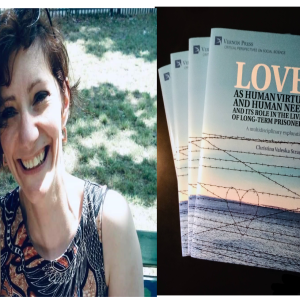
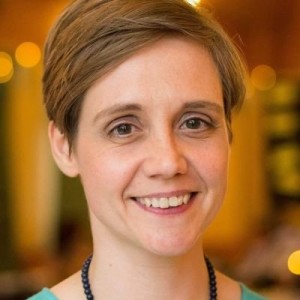
Dr Christina Straub’s interest is centred around qualitative social research in general and prison research in particular. She graduated as a Cultural Scientist (MA) at the European-University-Viadrina, Germany, in 2009 with an ethnographic study about the construction of individual identity in the subculture of Hot Rodding (car culture).Her first post-grad employment as a Research Assistant for the Prisons Research Centre at the Institute of Criminology, University of Cambridge led her into a high-security prison exploring staff-prisoner-relationships together with Prof Alison Liebling and Helen Arnold. The many stories and layers of the prison environment ever since continued to play a major role in her work. It included, for example, qualitative research for London-based charity The Forgiveness Project or looking into the specific pains and needs of families of people serving an Indeterminate Sentence for Public Protection (IPP) together with Dr Harry Annison (Southampton Law School) and in collaboration with the Prison Reform Trust. Currently she works with Dr Kate O´Brien at Durham University on a project evaluating the Early Days in Custody programme delivered by NEPACS. She is passionate about and inspired by multidisciplinary research (using neurosciences, psychology, sociology, and moral philosophy for example) that aims to deliver holistic insights into the micro- and macro-levels of human existence, human resilience, and sustainable ways for humanity to move forward (individually, socially, and institutionally).
Christina's latest book is
Love as human virtue and human need and its role in the lives of long-term prisoners
https://www.amazon.co.uk/human-virtue-lives-long-term-prisoners/dp/1622739663/ref=sr_1_1?crid=1SPAAB22PM4C3&dchild=1&keywords=christina+straub&qid=1635156221&sprefix=christina+straub%2Caps%2C94&sr=8-1
And she recommends All about Love by bell hooks
https://www.amazon.co.uk/All-About-Love-Visions-Paperback/dp/0060959479/ref=sr_1_1?crid=18F5SRYGWCS8R&dchild=1&keywords=all+about+love&qid=1635156284&sprefix=all+about+love%2Caps%2C93&sr=8-1
https://www.amazon.co.uk/Work-Jairus-McLeary-Gethin-Aldous/dp/B075GV1KG4
Wednesday Oct 20, 2021
Wednesday Oct 20, 2021
Lydia Guthrie is a trainer, group facilitator and supervisor, working in criminal justice, mental health and social work settings. She spent ten years working for the Probation Service in a range of specialisms, including work with long term prisoners, and groupwork with men who have committed sexual abuse and domestic abuse. She worked as a supervisor and team manager, and also developed and delivered programmes for victims and survivors of abuse.
From 2008 to 2012, she was contracted - with Clark Baim - as co-lead national trainer for the UK's community-based sexual offending treatment programmes, run by the Probation Service for England and Wales. Before qualifying as a social worker, she gained an undergraduate degree (PPE) and an MSc in Social Work from Oxford University, and worked in the voluntary sector with adults with learning disabilities, adults with physical disabilities, and with teenagers in the "looked after" system.
Lydia is passionate about attachment theory, reflective supervision, mindfulness and self-compassion. As a believer in life-long learning, she has studied extensively in the Dynamic Maturational Model of Attachment and Adaptation.

Wednesday Oct 13, 2021
Wednesday Oct 13, 2021
Luisa specialises in the anthropology of intimacy, violence and law and has been conducting compassionate, collaborative, engaged anthropological research in Sierra Leone since 2011 and in Germany since 2018. She studies how people negotiate the space to live their most intimate needs on various levels of social and legal organisation. She is particularly interested in the friction between care and control, between rights, protections and their practical realisation that arise from the divide between private and public spheres, both through the politico-legal separation between home/house and street, and through conflicting discourses regarding which areas of life states may regulate and in what way. She is interested in what laws ‘do’ and how they interact with how people govern their lives in diverse contexts. Louisa works on social issues and tries to make theory answerable to practice which means that she collaborates closely with practitioners, politicians and policy makers and actively communicates research findings in newspapers, on television and expert platforms.
Another cornerstone of her research turns inward and looks at social sciences, at the nexus between ethnographic unpredictability and institutional demands and at how we conduct and navigate research, academia and the university. She have been writing about various aspects of what we could call the ugly underbelly of anthropological work (ontological insecurity, loneliness, violence, abuse). She asks what anthropologists and institutions can and should do to challenge and deconstruct violent structures, prevent harm where possible and to offer support while taking seriously the unpredictability of human interactions?
https://research.vu.nl/en/publications/let-me-take-a-vacation-in-prison-before-the-streets-kill-me-rough
Sexual violence during research: How the unpredictability of fieldwork and the right to risk collide with academic bureaucracy and expectations.
https://journals.sagepub.com/doi/10.1177/0308275X20917272

Wednesday Oct 06, 2021
Wednesday Oct 06, 2021
We are fortunate that there are people looking at parts of our criminal justice system which otherwise can be easily overlooked. Jayne Price is one of those people and here she describes her work studying the process of transition for young people moving from a Young Offenders Institution to an adult prison.
Price, J. (2021). The impacts of the drop in staffing provision in the transition between the youth custody estate and young adult/adult estate. Prison Service Journal, 256, pp. 23-29. https://www.crimeandjustice.org.uk/sites/crimeandjustice.org.uk/files/PSJ 256 September 2021_0.pdf
Price, J. (2021) Violence, Control and Restraint: The Harms to Young Adults Particularly Upon Transition, The Howard Journal of Crime and Justice, https://doi.org/10.1111/hojo.12418
Price, J. & Turner, J. (2021) (Custodial) spaces to grow? Adolescent development during custodial transitions, Journal of Youth Studies, https://doi.org/10.1080/13676261.2020.1865525
Price, J. (2020) The experience of young people transitioning between youth offending services to probation services. Probation Journal, 67(3), 246-263. https://doi.org/10.1177/0264550520939166
Jayne joined the Department of Social and Political Science, Chester University as Lecturer in Criminology in September 2018. In October 2019 she completed her PhD at the University of Liverpool. The project was a CASE studentship with Her Majesty’s Inspectorate of Prisons funded by the Economic and Social Research Council. The research aimed to ‘explore pathways and transitions between juvenile and adult penal institutions’. Through speaking to young people who experience the transition, key stakeholders, observations within the institutions alongside analysis of relevant literature and HMIP survey data, the research findings contribute to the on-going collective reflexive learning of policy and practise. The original research sought to establish the most effective and progressive way of supporting young people through the transition.
Brewster D (2020) Not Wired Up? The Neuroscientific Turn in Youth to Adult (Y2A) Transitions Policy. Youth Justice 20(3): 215–234.
Coyle B (2019) ‘What the f**k is maturity?’: Young adulthood, subjective maturity and desistance from crime. British Journal of Criminology 59(5): 1178-1198.
HM Inspectorate of Prisons (2021) Outcomes for young adults in custody. HM Inspectorate of Prisons, January. https://www.justiceinspectorates.gov.uk/hmiprisons/wp-content/uploads/sites/4/2021/01/Young-adults-thematic-final-web-2021.pdf
House of Commons Justice Committee (2018a) Young adults in the CJS: eighth report of session (HC 419). House of Commons Justice Committee. https://publications.parliament.uk/pa/cm201719/cmselect/cmjust/419/419.pdf
House of Commons Justice Committee (2018b) Young adults in the CJS: Government response to the Committee’s eighth report of session 2017-19. Fifth report of session 2017-19 (HC 1530). House of Commons Justice Committee. https://publications.parliament.uk/pa/cm201719/cmselect/cmjust/1530/1530.pdf
Lancaster University Research Project http://www.research.lancs.ac.uk/portal/en/upmprojects/breaking-the-carecrime-connection-learning-from-careexperienced-women-in-prisondisrupting-the-routes-between-care-and-custody-learning-from-females-in-the-care-and-criminal-justice-systems(067b972d-bd2d-4e74-afcb-2867d2a80f2b).html
Transition to Adulthood Alliance https://t2a.org.uk/t2a-evidence/research-reports/

Wednesday Sep 29, 2021
Wednesday Sep 29, 2021
Simon Partridge describes himself as a disillusioned ex-analysand. He is a great thinker and talker and a freelance writer/researcher. He has covered: community broadcasting; devolved politics; the British-Irish conflict; ethno-cultural mingling across the islands of Britain and Ireland; the psycho-biological consequences of detached upper-class child rearing and boarding/residential schools; inter-generational war trauma; and developmental trauma/Complex-PTSD. He posts on Boarding School Survivors Face Book, and is a founding member of the London Adverse Childhood Experiences (ACEs) Hub - Find it here https://www.londonaceshub.org/ .
He continues to explore and write, from lived experience, about the linkage between early attachment deficits and ACEs. He has just written a great paper,
'What happened to you? Attachment theory extended'
which can be found here, https://www.ingentaconnect.com/contentone/phoenix/att/2021/00000015/00000001/art00001#
Wednesday Sep 22, 2021
Wednesday Sep 22, 2021
Some events are so painful, so shocking that they are difficult to think about, to face up to. This conversation is inevitably tainted with the horror at Utøya ten years ago this summer but Knut focusses on the people and the systems that dealt with the immediate aftermath. The prison managers, the officers, the politicians.
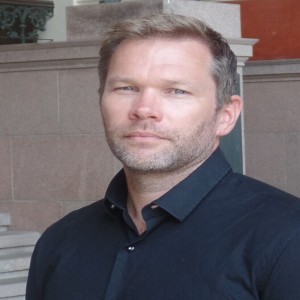
Knut Sorenson has worked for 28 years in the Correctional Service in Norway, educated and served as a prison officer for eleven years, he started as a teacher at the University College of Norwegian Correctional Service. He is also a sociologist and now a phd candidate in criminology at the University of Oslo. His recent research concerns the effects upon prison staff of working with a very high profile prisoner Anders Breivik as described in his paper Prison officers’ coping strategies in a high-profile critical situation: Imprisonment after the 2011 terrorist attacks in Norway
Wednesday Sep 15, 2021
Wednesday Sep 15, 2021
How do you create compassionate cultures? What does compassionate leadership look like and what are the economic benefits?
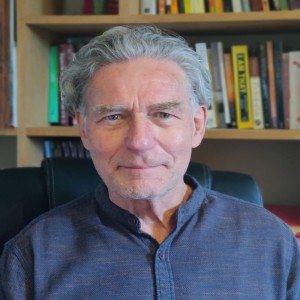
Michael West CBE joined The King's Fund as a Senior Fellow in 2013. He is Professor of Work and Organisational Psychology at Lancaster University, Visiting Professor at University College, Dublin, and Emeritus Professor at Aston University.
Hugely experienced Michael has authored, edited and co-edited 20 books and has published more than 200 articles on teamwork, leadership and culture, particularly in healthcare. He is a Fellow of the British Psychological Society, the American Psychological Association (APA), the APA Society for Industrial/Organisational Psychology, the Academy of Social Sciences, the International Association of Applied Psychologists and the British Academy of Management.
Michael has extensive experience of working to improve staff experience and care quality. He assisted the development of the national frameworks on improvement and leadership development in England in Northern Ireland, and is currently supporting Health Education and Improvement Wales to develop the national health and care leadership strategy in Wales. He co-chaired the two-year inquiry into the mental health and wellbeing of nurses and midwives across the UK which was published in 2020. His latest book is Compassionate Leadership published this summer, the link is below.
https://www.amazon.co.uk/Compassionate-Leadership-Sustaining-Humanity-Presence/dp/0995766975
Wednesday Sep 08, 2021
Wednesday Sep 08, 2021
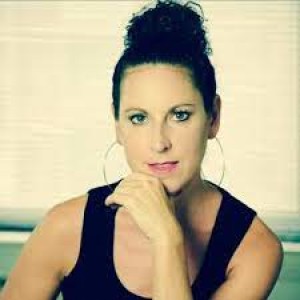
Dr. Baz Dreisinger is a great speaker and Professor at John Jay College of Criminal Justice, City University of New York;
Author of the critically acclaimed book Incarceration Nations: A Journey to Justice in Prisons Around the World;
https://otherpress.com/books/incarceration-nations/
Founder of John Jay’s groundbreaking Prison-to-College Pipeline program;
Founder and Executive Director of Incarceration Nations Network;
2018 Global Fulbright Scholar and current Fulbright Scholar Specialist.
Dr. Dreisinger speaks regularly about justice issues on international media and in myriad settings around the world. The film series she directed, Incarceration Nations: A Global Docuseries, had its world premiere at the Tribeca Film Festival in June 2021.
If you want to connect or have a showing in your locality contact Baz at Incarceration Nations Network
https://incarcerationnationsnetwork.org/

Wednesday Sep 01, 2021
Wednesday Sep 01, 2021
Earlier this year the British Psychological Society expelled its President Elect Professor Nigel MacClennan who had been elected on a reformist platform. This brought to the surface serious issues about governance, integrity and the vindictiveness of organisations who feel under attack. The BPS is not the first organisation to experience such issues. Here two hugely experienced psychologists talk about why they are so concerned about the state of the BPS and what they would like to see happen.
Pat Harvey (Guinan) has been a British Psychological Society member for around 50 years. She was Chair of the Division of Clinical Psychology 1997-8. She developed and managed a large NHS Psychology and Counselling service in the North West. Additionally she was member of the Mental Health Act Commission and a panel member of an Independent Inquiry into 3 homicides by a conditionally discharged patient. In those latter contexts as well as her managerial NHS role she had considerable experience of handling formal complaints in organisational contexts. She retired as a psychologist in 2002 and trained and practice as an artist before re-engaging in issues concerning complaints regarding the governance and policies of the British Psychological Society in 2020.
David Pilgrim PhD is Honorary Professor of Health and Social Policy at the University of Liverpool and Visiting Professor of Clinical Psychology at the University of Southampton. Now semi-retired, he trained and worked in the NHS as a clinical psychologist before completing a PhD in psychology and then a Masters in sociology. With this mixed background, his career was split then between clinical work, teaching and mental health policy research. He remains active in the Division of Clinical Psychology and the History and Philosophy Section of the British Psychological Society, and was Chair of the latter between 2015 and 2018.
His publications include Understanding Mental Health: A Critical Realist Exploration (Routledge, 2015) and Key Concepts in Mental Health (5th edition, Sage, 2019). Others include A Sociology of Mental Health and Illness (Open University Press, 2005- winner of the 2006 BMA Medical Book of the Year Award), Mental Health Policy in Britain (Palgrave, 2002) and Mental Health and Inequality (Palgrave, 2003) (all with Anne Rogers). His recent books are Child Sexual Abuse: Moral Panic or State of Denial? (Routledge, 2018) and Critical Realism for Psychologists (Routledge, 2020).
Thursday Aug 26, 2021
Thursday Aug 26, 2021
Sarah Paget has been the Programme Manager for the Community of Communities, a quality network for Therapeutic Communities at the Royal College of Psychiatrists’ Centre for Quality Improvement, since 2004. Her work involves the coordination of services and activities that lead to improvement and/or systemic change in a range of services for adults, children and young people across the NHS, voluntary, private, independent, education and criminal justice sectors. She is co-founder of Enabling Environments which was developed in 2009 and has been the Operational Lead for National Enabling Environments in Prisons and Probation Programme since 2013. She also manages two additional Quality Improvement Networks for inpatient Mental Health Rehabilitation and Older Age Mental Health services. Sarah has a Master’s Degree in Psychoanalytic and Systemic Approaches to Understanding Organisations and Leadership from the Tavistock and has a background in Mental Health Nursing and Social Psychology. Prior to her current role she managed a Voluntary Sector Therapeutic Community for people with severe and enduring Mental Health problems for 10 years. Sarah is currently a director of The Consortium of Therapeutic Communities and has written and taught TC principles and practice to a wide range of audiences.
Sarah is leaving her role as Programme Manager at RCPsych to embark upon her “Third Stage of life” or Vanaprathsa, according to Hindu philosophy (Hall and Stokes 2021)*. Sarah has spent the past 17 years working with services to improve the quality of the psychosocial environment and will continue to support Therapeutic Communities and Therapeutic Community practice as well as the development of Enabling Environments in all sectors. Sarah offers individuals and organisations the opportunity to look beyond the superficial and obvious to develop an authentic and profound understanding of how individuals and groups interconnect and impact on individual health and organisational functioning. Her methods will involve consulting to individuals and groups using a psychodynamic and systemic framework.
Sarah can be contacted at sarahpaget@gmail.com and at linkedin.com/in/spaget
* Changing Gear, a Book by Jan Hall and Jon Stokes (changing-gear.com)

Wednesday Aug 25, 2021
Wednesday Aug 25, 2021
Dr Sarah-Jane Lennie is a Chartered Psychologist and Lecturer in the Police, Organisation and Practice Department of the Open University, UK. Sarah-Jane specialises in social psychology, emotions in the workplace and the mental health and well-being of police officers.
Sarah Jane comes from a family with deep experience and comittment to the public services including the army and the police force and this brings exceptional weight to her observations of the systemic deficits relating to emotional wellbeing.
Prior to returning to academia Sarah-Jane served for 18 years as a police officer, to the rank of Detective Inspector. Sarah-Jane is an Associate to the College of Policing, as a subject matter expert in mental health and organisational culture. Sarah-Jane’s research focus is on supporting police officer’s emotional wellbeing through the exploration of officer’s lived experience and the impact of organisational culture on individual mental health. Sarah-Jane looks at the role of stigma, emotional suppression and dissociation in the increasing cases of PTSD within British officers.
This conversation is part of a double bill we release along with Paul Bradford's reflections on police call centres and emotional literacy and implications for the police service as a whole

Wednesday Aug 25, 2021
Wednesday Aug 25, 2021
Paul Bradford was a serving police officer for thirty years rising to the rank of Inspector. As a single parent family he strove to manage his career to ensure that he was able to best look after his family. His time in community policing enabled him to spend time with victims of crime in ways since eliminated by the new managerialism. He brounght the insights and sensitivity that he gained to his research 'An Emotional Response: The theoretical case for the development of emotional literacy and procedural justice in police call handling.' In this conversation Paul talks about his research and some of the wider implications for police forces.
This conversation is part of a double bill we release along with Sarah-Jane Lennie's research on supporting police officer’s emotional wellbeing through the exploration of officer’s lived experience and the impact of organisational culture on individual mental health.
Wednesday Aug 18, 2021
Wednesday Aug 18, 2021
This is a powerful conversation which is sometimes painful to hear as Lucy describes the inequalities and persecutions for imprisoned mothers and their children. Dr Baldwin points out that the female prison estate is much more related to the needs of the prison service than the risk level of women themselves. The needs of their children are frequently ignored or given a low priority and she points out the importance of ‘academic activism’ in this situation.
(Don't forget to listen to Naomi and Davids final comments at the end.)
Lucy is a Senior Lecturer and researcher at De Montfort University. Lucy has worked in criminal and social justice for over 30 years being also a qualified social worker and probation officer. Lucy’s research and publications focus predominantly on the impact of imprisonment on mothers and their children. Lucy’s Doctoral research focussed on the persisting impact of maternal imprisonment, particularly concerning maternal identity and maternal role. Lucy gave evidence to the recent female focussed farmer review and the 'Joint Human Rights Inquiry in Maternal Imprisonment and the Rights of the Child'. Lucy is currently researching the supervision of mothers and trauma informed probation practice.
When Lucy published Mothering Justice in 2015 it was the first whole book in the Uk to take motherhood as a focus in relation to criminal and social justice. She says thankfully since then the world is more interested in the topic and in the circumstances surrounding criminalised mothers and their children. Lucy has published a number of articles and book chapters (some of her work can be accessed here https://www.nicco.org.uk/directory-of-resources/lucy-baldwin-works-on-maternal-imprisonment) and is currently working on three edited collections and two books - all related to women, mothers and justice. Lucy is a passionate and active advocate for positive change for criminalised women and would like to see a drastically reduced prison population and increased use gender tailored community disposals. Lucy is working closely in partnerships with several organisations to provide resources and training for those working with criminalised mothers and mothers themselves.

Why 'Locked up Living?'
David is a psychotherapist who has worked leading therapeutic communities in English prisons and in Millfields, an NHS forensic setting in East London. Naomi is a Consultant Clinical and Forensic psychologist who was, for many years, clinical lead at The Fens, a treatment programme for serious offenders at HMP Whitemoor. We had both experienced painful and destructive forces in our work and so we set out to discover what things make a positive difference for staff and service users and what is it that makes things go wrong. Of course we found out that there is no easy answer but there are many fascinating and valuable experiences to be heard.