The Locked up Living Podcast: Surviving and thriving in prisons and other challenging environments
Can institutional culture challenge your mental health? What if your job makes you feel shame, sadness, grief, disgust and fear? What if you are expected not to feel? Or you are expected to be relentlessly competitive? What it’s like to live or work in a prison? Does working with people who commit murder, child abuse and rape affect people who work in prisons and the wider criminal justice system?
How do people survive and thrive when facing significant challenges to our emotional health over a lengthy period? How do we protect ourselves and stay compassionate, loving and trusting? Importantly, how do we find and preserve hope?
Fyodor Dostoevsky wrote that “The degree of civilisation in a society can be judged by entering its prisons”. In this weekly podcast ,your hosts, David Jones (Forensic psychotherapist) and Dr Naomi Murphy (Consultant Clinical & Forensic Psychologist) hope that exploring less visible aspects of prisons will help listeners see that prisons are a window into society and let us see people not only at their worst but also at their best. We feature a rich range of guests sharing snap shots of life in prisons and take a look at hospitals, schools, sport and the police in order to learn from other institutions. We learn about challenges to human integrity and hear important lessons and heart-warming stories about survival and growth when facing adversity in harsh places. We hope that sharing our conversations can help you make changes to your own relationship with institutions that might challenge your emotional health and well-being.
Follow and connect with us and give us feedback. Let us know what you think works, and also what doesn’t. We want you to look forward to the podcast each week. We’ll also be extremely grateful for any reviews that you give us. A simple star or two or a thumbs up will do.
Email: lockedupliving@gmail.com or connect with us on:
Substack: https://lockedupliving.substack.com
Twitter: https://twitter.com/LockedUpLiving
Linkedin: https://www.linkedin.com/in/naomimurphypsychologist/
https://www.linkedin.com/in/david-jones-41910b12/
Insta: https://www.instagram.com/lockedupliving/
Listen on:







Episodes

Wednesday Apr 13, 2022
Wednesday Apr 13, 2022
Today our podcast is a little different. You’re used to hearing David Jones bring his experience and knowledge to light in asking questions and sharing anecdotes about his professional life. Today we thought we’d give you the chance to hear more about his many years of experience.
David Jones is a psychotherapist with extensive experience in clinical work specializing in working with offenders within a prison treatment and health setting, with a focus on groups. He has extensive experience in mental health and the voluntary sector. David has published a number of books and articles and we include their details below.
He has worked at the Phoenix Unit in Oxford, was Consultant Psychotherapist at Millfields in East London, was a clinical lead at HMP Grendon and with the new TC+ for men with learning difficulties, at HMP Gartree.
David likes to throw himself into everything he does and as well as being on the Board of the International Association for Forensic Psychotherapy for several years, he was also Secretary of this board for a period (2008 – 2010). He has also been a member of the Research Advisory Group at HMP Grendon. Since 2008, he has been the Prisons expert for the Community of Communities Prison Therapeutic Community at the Royal College of Psychiatrists. Lastly, David has been involved with the UK Personality Disorder Pathway project since 2002.
Selected books and papers.
https://www.amazon.co.uk/Working-Dangerous-People-Psychotherapy-Violence/dp/1857758242
https://www.amazon.co.uk/Humane-Prisons-David-Jones/dp/1857757203
https://www.academia.edu/7572919/SHAME_DISGUST_ANGER_AND_REVENGE_HOMOSEXUALITY_AND_COUNTERTRANSFERENCE
https://www.academia.edu/12523921/The_Malign_Transference_Dealing_with_the_unbearable_in_the_internal_world_of_the_murderer
https://www.academia.edu/12322685/Therapy_in_Peversity
There is another unusual aspect to our podcast today. We thought it would be an idea to have a guest contribution to our discussion in a more novel way so we’ve invited along Des McVey to help out.
Naomi knows Des very well since she has worked with him in various locations since 1996. Des is a consultant nurse psychotherapist with 40 years experience of nursing in a variety of settings. They first worked together in a Medium Secure unit before setting up the first mental health in-reach team in an English prison. Eventually, they were approached to establish the first treatment service for people under the Labour Govts DSPD initiative. DSPD stood for Dangerous and Severe Personality Disorder and whilst it was awfully named it offered a chance to create treatment opportunities for people who were unable to access any mental health treatment in prisons. We’ve also edited a book together about creating services for people with a history of trauma. Des will no doubt be back to discuss his experience.
Wednesday Apr 06, 2022
Wednesday Apr 06, 2022
There are many people working in our services whose role may be overlooked but which is nevertheless valuable. The role of advocate is one such and has grown in significance as we have become more aware of the power imbalance between staff and service user and the importance of amplifying the service user voice.
Geoff Smith has been a qualified as an IMHA in 2011/2012 fairly soon after local authorities provided funding for the new role as set out in s130A through to s130L of the amended MHA 2007.
He has worked extensively in in-patient and community settings since 2008 and describes his work as “humbling”. Geoff has worked exclusively within a London Borough characterised by culturally diversity and socio-economic deprivation. I came across Geoff on social media when he was discussing a period of difficulty in his personal life and how that impacted on his ability to perform his role and this made me realise we hadn’t covered advocacy at all. Perhaps this is reflective of how much in the mind of service providers advocacy is? Advocates have to walk a difficult balance of organisations being aware of them but without belonging within services to the degree that their independence is compromised.
Geoff is also a talented singer and you will be really glad if you listen to him singing Metamorphosis here, https://soundcloud.com/user-847494429/metamorphosis?utm_source=clipboard&utm_medium=text&utm_campaign=social_sharing
Geoff and colleagues are also raising money for the Disasters Emergency Committee and you can listen to the song War Child that they have released here, https://youtu.be/3QwCaTrIRWk
and find the link to donate to the DEC here, https://www.justgiving.com/dec
Wednesday Mar 30, 2022
Wednesday Mar 30, 2022
Those who have commited sexual offences may be vilified, abused or physically beaten. Often they are regarded as untreatable as well. Anna Kotova and Geraldine Akerman take a different approach. Following their research with residents and staff they argue that a therapeutic community can provide a safe and effective environment. In this podcast they explain their findings. See free access to their paper via the link below.
Navigating moral dimensions and lateral power – The experiences of men with sexual convictions and histories of sexual abuse serving sentences in a therapeutic community
https://journals.sagepub.com/doi/full/10.1177/26326663221074263
Anna Kotova in a Lecturer in Criminology at Birmingham University. Her teaching and research interests are in prison sociology and the collateral impact of imprisonment on families of prisoners. She has researched the impact of long sentences on partners of prisoners in the UK, the experiences of prisoners serving sentences for sex offences in a therapeutic community and the use of video-call technology in prisons. She teaches Criminological Theory I and Punishment in a Global Context.
Geraldine Akerman is a Forensic Psychologist who has worked HMP Grendon for many years and now works for the NHS.
Wednesday Mar 23, 2022
Wednesday Mar 23, 2022
Phil is a senior accredited counsellor and psychotherapist specialising in working with boys and men who have experienced recent and/or historic sexual abuse. Since 2004 Phil has worked therapeutically with males affected by rape, sexual abuse, sexual violence and sexual exploitation. Phil experienced sexual exploitation as a child, and rape as a young adult. He is an experienced public speaker and has trained thousands of professionals across the country on male sexual abuse/exploitation addressing how masculinity can play a part and help boys and men deal with abuse. Between 2009 and 2018 Phil was the Project Coordinator of a male only child sexual exploitation (CSE) service. Here, Phil was instrumental in the development of nationally recognised male CSE resources and in the support provided to a sexually exploited boy highlighted in Jack CSE serious case review. Phil also managed the national male CSE development project 'Excellence for Boys' which saw male referrals to 20 CSE services increase from 91 to 249. Phil has appeared on TV and in the media on numerous occasions highlighting the abuse of boys and men, and has contributed to various research and publications addressing male CSE. Phil is also a qualified supervisor and supervises trainee and qualified practitioners working with vulnerable children and adults. Phil is passionate about ensuring boys and men at risk of, or who have experienced abuse are appropriately identified and supported in a way that promotes gender equality and combats misandry and gender biased practice, ensuring services are appropriately accessible to and inclusive of males. Further details can be found at the website: www.counsellingwithphil.co.uk
https://counsellorinleeds.co.uk/boys-cse-training/
Wednesday Mar 16, 2022
Wednesday Mar 16, 2022
Roma got the idea to start Prison Service Radio while volunteering in Feltham Young Offenders prison. This is a remarkable story of determination, charm and persistence as working in this tough extablishment and in collaboration with others, Roma set up a radio service which spread throughout the whole system.
Tuesday Mar 08, 2022
Tuesday Mar 08, 2022
Tammi Walker is Principal of St Cuthbert’s Society and Professor of Forensic Psychology at Durham University. She is a Chartered Psychologist and Fellow of the British Psychological Society, Registered Senior Fellow with Advance HE and a mental health nurse by clinical background. Tammi has a visiting position at the Manchester University.
She has spent extensive experience of researching and working in prison and secure care settings, including maximum security prisons for recidivistic sexual and violent offenders. She has completed work in this profession for over 17 years and has an advanced level of knowledge in forensic mental health, forensic psychiatry and forensic psychology.
She is currently working as a series editor with Graham Towl (Durham University) on a new series entitied: New Frontiers in Forensic Psychology for Routledge. These short, co-authored books over the next two years will provide insight into new areas of investigation in forensic psychology, or new perspectives on existing topics of enquiry. Tammi currently collaborates with a number of prison and secure care services. She co-authored 'Tackling Sexual Violence at Universities: An International Perspective' (2019: Routledge Press) and was the lead author of 'Preventing Self-injury and Suicide in Women's Prisons' (2016: Waterside Press) with Professor Graham Towl, which won the national British Psychological Society Book Award 2017 for Best Practitioner Text.
Wednesday Mar 02, 2022
Wednesday Mar 02, 2022
Ari Schonbrun is an author, speaker and 9/11 survivor. He was the Chief Administrative Officer of Cantor Fitzgerald and Co., one of the world’s leading financial services firms.
Mr. Schonbrun was on the 78th floor of Tower One when the first plane hit on September 11, 2001. He helped a colleague suffering third degree burns to safety and was thrown into the national spotlight thereafter. His miraculous first-hand account about survival has been retold in newspapers, magazines, broadcast outlets, and books.
Mr. Schonbrun is a renowned inspirational speaker and the author of Miracles & Fate on 78. He draws from the personal heartbreak he endured during the devastation of 9/11 and has inspired audiences worldwide.
He is also the host of Whispers & Bricks Podcast and the creator of Whispers & Bricks Academy, a 7 week program focusing on “your personal breakthrough”.
Mr. Schonbrun is a native New Yorker. He is passionate about philanthropy and serves as a board member of Strength to Strength, a global non-profit organization that works with victims of terror across the world. Mr. Schonbrun and his wife, Joyce, live in New York. They have five children and several grandchildren.
Wednesday Feb 23, 2022
Wednesday Feb 23, 2022
This is one of our favorite conversations. Kevin Leggett spent many years working with young offenders at Aylesbury and Huntercombe, and he was deputy governor at HMP Grendon during a period of great change when there was a serious escape. Kevin talks about these times with great warmth and humour and his descriptions of connection with his charges provide a real insight into the meaning of relational working.
Kevin Leggett is a now retired prison governor with over thirty years service. Although originally from Durham he began his career as a prison officer at the young offenders establishment Aylesbury and subsequently worked at the prisons Bullingdon, The Mount, Grendon (where I first met Kevin) and Huntercombe as well as having execurive roles for the implementation of policies in the south of England.’

Wednesday Feb 16, 2022
Wednesday Feb 16, 2022
Ariel is is a Canadian artist, scientist and intellectual known for her work in integrating art and science. She is a neuroscientist and psychotherapist and here she talks about many things but including the importance of sleep and meditation to effective brain functioning. She is the Co-Founder of InteraXon makers of Muse (an award-winning brain sensing headband that we will hear more about during the conversation). Ariel studied neuroscience in Toronto and researched Parkinson’s Disease and hippocampal neurogenesis. However, alongside this she is also a fashion designer and has had her work displayed at the Art Gallery of Ontario. Whilst InteraXon is a very successful company we haven’t just invited Ariel on to promote her products but because she is a really inspirational woman with divergent interests.
Wednesday Feb 09, 2022
Wednesday Feb 09, 2022
Our second episode considering the place of faith and religion in a prison system, this time in the UK. As well as reminding us how big a part transportation played in our criminal justice system, Jacqueline looks at the meaning and role of pastoral care and how faith provides a direction and an opportunity for many.
Having graduated from the University of Aberdeen with a first class honours Masters of Art in Theology & Religious Studies (2021), Jacqueline is now further researching the effect of religion/spirituality on the posttraumatic growth of criminal offenders in the U.K and their desistance from crime.
Wednesday Feb 09, 2022
Wednesday Feb 09, 2022
We were fortunate to have two such interesting 'hands on' academics in this conversation. Within an academic climate that is not always sympathetic or collaborative they engaged in a three year research project in one of the most notorious penal establishments in the Uniteds States, Angola.
Dr. Michael Hallett is a full Professor in the Department of Criminology & Criminal Justice at the University of North Florida. Dr. Hallett just finished his fourth book and has published research appearing in numerous additional books and journals including Punishment & Society, Journal of Offender Rehabilitation, Critical Criminology and others. Dr. Hallett's focus is Corrections & Social Inequality, Punishment & Society, and Religion & Crime. Dr. Hallett designed Jacksonville Sheriff's Office Pretrial Services Unit (drug treatment/diversion) and has completed extensive work with local organizations including Prisoners of Christ, Operation New Hope, Hubbard House, the City of Jacksonville, JCCI and others. Most recently, Dr. Hallett led a three-year study at America's largest maximum-security prison, "Angola" (aka Louisiana State Penitentiary) exploring the religious lives of long-term inmates. He has served as Principal Investigator on grants from the US Department of Justice, Florida Department of Juvenile Justice, Jacksonville Sheriff's Office, Jesse Ball DuPont Foundation, and several other organizations. Dr. Hallett has chaired two academic departments at UNF (Sociology, Anthropology & Criminal Justice and Criminology & Criminal Justice) after first directing the Graduate program in Criminal Justice. Dr. Hallett frequently works on local justice issues in Jacksonville and has completed over a dozen funded projects at UNF, often employing students in the research. Dr Hallett also serves as a Senior Research Fellow at Baylor University's Institute for Studies of Religion.
Hallett, M. (Guest Editor) Special Issue * Social Justice * "Emancipatory Justice." Forthcoming 2017.
Hallett, M., J. Hays, B. Johnson, SJ Jang, G Duwe (2017). https://www.routledge.com/The-Angola-Prison-Seminary-Effects-of-Faith-Based-Ministry-on-Identity/Hallett-Hays-Johnson-Jang-Duwe/p/book/9780815351733?gclid=Cj0KCQiAxoiQBhCRARIsAPsvo-xH9-GOhfmTalVcw6RsQWJhZu3I2Q1NcNrq97aGFmqIBpGNEJiiS7caAqvAEALw_wcB
Hallett, Michael A. 2006. Private Prisons in America: A Critical Race Perspective. Chicago: University of Illinois Press.**
Hallett, Michael A. (Editor). 1997. Activism and Marginalization in the AIDS Crisis. New York: Routledge.**
Hallett, Michael A. and Dennis J. Palumbo. 1993. U.S. Criminal Justice Interest Groups: Institutional Profiles. Westport, CT: Greenwood Press.**
Byron Johnson is Distinguished Professor of the Social Sciences at Baylor University. He is the founding director of the Baylor Institute for Studies of Religion (ISR) as well as director of the Program on Prosocial Behavior. He is a leading authority on the scientific study of religion, the efficacy of faith-based organizations, and criminal justice. He has been the principal investigator on grants from private foundations as well as the Department of Justice, Department of Labor, Department of Defense, National Institutes of Health, and the United States Institute for Peace. He is the author of more than 250 articles and a number of books including More God, Less Crime (2011), The Angola Prison Seminary (2016), The Quest for Purpose (2017), The Restorative Prison (2021), and Objective Religion (2021). He is project director for the Global Flourishing Study, a longitudinal data collection and research collaboration between scholars at Harvard University and Baylor University, in partnership with Gallup and the Center for Open Science and with the support of a consortium of funders. The $43.4 million initiative will include data collection for approximately 240,000 participants from 22 geographically and culturally diverse countries.
Wednesday Feb 02, 2022
Wednesday Feb 02, 2022
Tyrone Walker entered the American prison system at the age of 19. In this candid conversation he describes where he came from, what it was like entering prison and the benefit he gained from the wisdom of a particular older peer.
After serving nearly 25 years in prison, Tyrone earned a certificate in business and entrepreneurship through the Georgetown Pivot Program. His Pivot Program internship with the Justice Policy Institute (JPI) led to a full-time position, in which he used his lived experience and subject matter expertise to effect policy changes. There, Tyrone spent two years advocating for sentencing reform and managing JPI’s projects around D.C’s Incarceration Reduction Amendment Act (IRAA) and Second Chance Amendment Act. As Director of Reentry Services with the Prisons and Justice Initiative, he supports students with their reentry needs both before and after release. He believes that helping our men and women while they are still on the inside is the most effective way to bridge the gap towards a successful reentry. When he is not working, he is taking classes online to earn his bachelor’s degree in political science.
Wednesday Jan 26, 2022
Wednesday Jan 26, 2022
This is a moving story which gives an account of a man's travel from a position of trust and respect to drug use, criminality and prison. Through self reflection and mentoring Jeff remade his life to make a positive contribution for the benefit of others.
For more than 20 years, Jeff served as managing attorney of a 20+ employee law firm headquartered in New York City representing family-owned and closely-held businesses and their owners. We invited Jeff onto the podcast after reading his story in New Yorker.
In 2001, after an addiction to prescription opioids he committed a white collar crime and served almost fourteen months in a Federal prison over the course of 2006/07. When Jeff left prison, he started his own re-entry by earning a Master of Divinity majoring in Social Ethics.
After graduating from divinity school, Jeff was called to serve at an inner city church in Bridgeport, CT as Associate Minister and Director of Prison Ministries. He then co-founded Progressive Prison Ministries, Inc. (Greenwich, CT), the world’s first ministry serving the white collar justice community. On May 5, 2021, Jeff’s law license was reinstated by the Appellate Division of the Supreme Court of the State of New York.
He is once again in private practice and is committed to using his legal expertise and life experience to benefit others.
Online white collar support group
https://prisonist.org/white-collar-support-group/
Progressive Prisons Ministries
https://prisonist.org
Bio
https://grantlaw.com/bio
https://www.newyorker.com/magazine/2021/08/30/life-after-white-collar-crime
https://www.entrepreneur.com/article/380464
Wednesday Jan 19, 2022
Wednesday Jan 19, 2022
Our guest has been described as “part writer, part journalist, part politico, part historian, part economist and mostly brains, intellect and common sense”. He’s also been described as “the finest radical voice of this generation”. We came across David Boyle last year when reading his wonderfully subversive “Tickbox” which explores the “insidious philosophy of automation and the misuse of data that weighs heavily upon us”. It’s impossible to work in the public sector and read his book and not experience a huge wave of overwhelming familiarity. In fact, those of us who work for the NHS but within a prison are unfortunate enough to experience a double dose of corporate inefficiency. Last yearNaomi invited David along to have a conversation at a conference the Fens Unit was due to hold to celebrate its 20th year anniversary but unfortunately Coronavirus put paid to those plans. So I am really pleased that I’ve managed to find an opportunity for us to sit down and have that conversation today instead.
Saturday Jan 15, 2022
Saturday Jan 15, 2022
Fifteenth of January, a year ago, Naomi Murphy and David Jones published the first Locked up Living Podcast. Fifty nine episodes later we return to the very first one in a specially edited version.
In this episode Gareth Ross and Lucy Reading told us about their recently published research which describes the social climate across therapeutic and non thereapeutic wings in a high secure prison. Looking back we can see the significance of the finding that a change in culture, which need not be expensive, can make a major change to the rehabilitative effectiveness of a prison setting.
Wednesday Jan 12, 2022
Wednesday Jan 12, 2022
Deborah Powney is a lecturer in Criminal Justice and a final year PhD Candidate specialising in recovery and growth in female and male victims of intimate partner abuse, domestic violence and coercive control. Having a particular focus on male victims, she has conducted two international studies throughout the pandemic to investigate the types, levels and impact of the abuse experienced by men across the world. A survivor of partner abuse herself, she prides herself on being an evidence-based researcher and therefore asserts that abuse is not a gendered issue.
She also explains the intrinsic similarity of a chocolate muffin and chocolate fudge cake and its relevance for critical thinking theory.
Wednesday Jan 05, 2022
Wednesday Jan 05, 2022
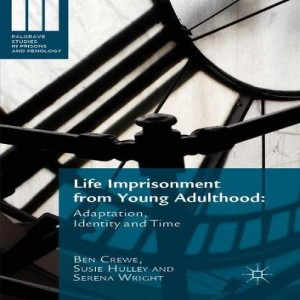
Ben Crewe, Susie Hulley and Serena Wright discuss their research on the implications of life imprisonment for young men and women. Their powerful experiences convey the deep and lasting sadness for all arising from such tragic events and the richness of their descriptions help us grasp the basic humanity of all those involved. This is quite a long podcast and may need two sittings. It is worth the listen and we found that the creative process, clearly evident in their work, was rekindled in the conversation itself.
Life Imprisonment from Young Adulthood
Adaptation, Identity and Time
https://link.springer.com/book/10.1057/978-1-137-56601-0
When the Advisory Committee on the Penal System reported on the prison regime for long-term prisoners in conditions of maximum security in 1968, only 168 individuals were serving sentences of longer than 10 years. Today, such sentences are bordering on commonplace. England and Wales have the highest number of life-sentenced prisoners within Europe, while increasing average sentence lengths mean that more men and women are serving longer periods in custody than ever before.Such considerations are located within relevant shifts in the penal system of England and Wales, in particular, the legacy of the minimum tariffs contained within the 2003 Criminal Justice Act, the ‘up-tariffing’ of ‘knife homicides’ and the increasing use of joint enterprise sentencing.
Wednesday Dec 29, 2021
Wednesday Dec 29, 2021
Dr Neil Scott Gordon is a forensic psychotherapist and has worked for over 40 years as a senior clinician and supervisor in high secure and community settings. He has had an extraordinary career in psychiatric nursing and forensic psychotherapy. The final years of his working life were devoted to the development and roll out of KUF (Knowledge and Understanding Framework), the major training development in the field of 'personality disorder' in the past half century.
He has conducted research into the client’s view of psychotherapy and has explored how psychotherapists in high secure environments adapt their therapeutic style in a context sensitive way. He has a Professional Doctorate in Psychotherapy and holds Masters Degrees in Organisation Development & Consultancy, and in Advanced Mental Health Practice. He co developed and delivered the Schema therapy group programme at Rampton High Security Hospital UK with Dr Kerry Beckley and was formerly responsible for multidisciplinary training and workforce development in the personality disorder service.He worked as a Senior Fellow in the Institute of Mental Health, Nottingham University, where he was responsible for the development of the the National Personality Disorder, Knowledge and Understanding Framework (KUF) commissioned by the UK Department of Health and Ministry of Justice. He has published articles on a wide range of topics including: schema therapy, personality disorder, organisational change, mental health education and qualitative research. He co-edited a text book on 'Working positively with the challenges of personality disorder in secure settings' which was published by Wiley in 2010.
https://www.institutemh.org.uk/images/KUF_prospectus_Final_OU_Approved.pdf
Wednesday Dec 22, 2021
Wednesday Dec 22, 2021
Jennifer Rodriguez is an attachment-based psychotherapist specialising inattachment-related issues and trauma. She holds a special interest in how the quality of our earliest attachments impact on our health, social and mental well-being; and in the neuroscience, neurobiology, ethology, phylogeny and how it shows up in the ‘between-us’ in the therapeutic space. She believes that there is a sacred primal wisdom in the body (mostly forgotten now in our fast-paced western civilisation), and in the wholeness of the mind-body-spirit in what it means to be human. As when Mother Nature designs things that work, she then replicates it everywhere, Jennifer believes that we are a species that thrives not only in connection to ourselves but to every living being/creature on Earth as well as being of the Earth, and of being part of a greater intelligence beyond our capacity to understand it right now... .She was educated, worked and lived in Trinidad, the UK, the US and France,which ignited her interest in the ties of culture and nationhood, multi-culturalperspectives and experiences.Alongside this, and with over 30 years of international commercial and corporateexperience of advising senior professionals and their organisations, Jennifer isexperienced in coaching individuals to improve their leadership skills. She beganher career as a chartered Civil Engineer working across the UK constructionindustry.
Wednesday Dec 15, 2021
Wednesday Dec 15, 2021
Marguerite Schinkel is a criminologist at the University of Glasgow and the Scottish Centre for Crime and Justice Research. Her research has focused on the meaning of sentences for those who serve them, focusing on long-term and persistent short-term prison sentences. She is also involved in another project funded by Community Justice Scotland, along with two colleagues, Cyrus Tata and Beth Weaver at Strathclyde University. The Meaning of Sentences is a pilot project which looks at the meanings given to the sentence imposed by the different actors in the courtroom. What meaning does the judge want to communicate, what meaning does the person sentenced perceive and what role does the defence lawyer play in these processes of meaning making?
More recently she has explored the impact of Covid-19 and the lockdown on penal experiences in Scotland and she is hoping to explore local ways out of harm in her next project. She is the co-founder of the Coalition Against Punishment, which aims to disrupt the punishment system in Scotland: https://capscotland.com/

Why 'Locked up Living?'
David is a psychotherapist who has worked leading therapeutic communities in English prisons and in Millfields, an NHS forensic setting in East London. Naomi is a Consultant Clinical and Forensic psychologist who was, for many years, clinical lead at The Fens, a treatment programme for serious offenders at HMP Whitemoor. We had both experienced painful and destructive forces in our work and so we set out to discover what things make a positive difference for staff and service users and what is it that makes things go wrong. Of course we found out that there is no easy answer but there are many fascinating and valuable experiences to be heard.